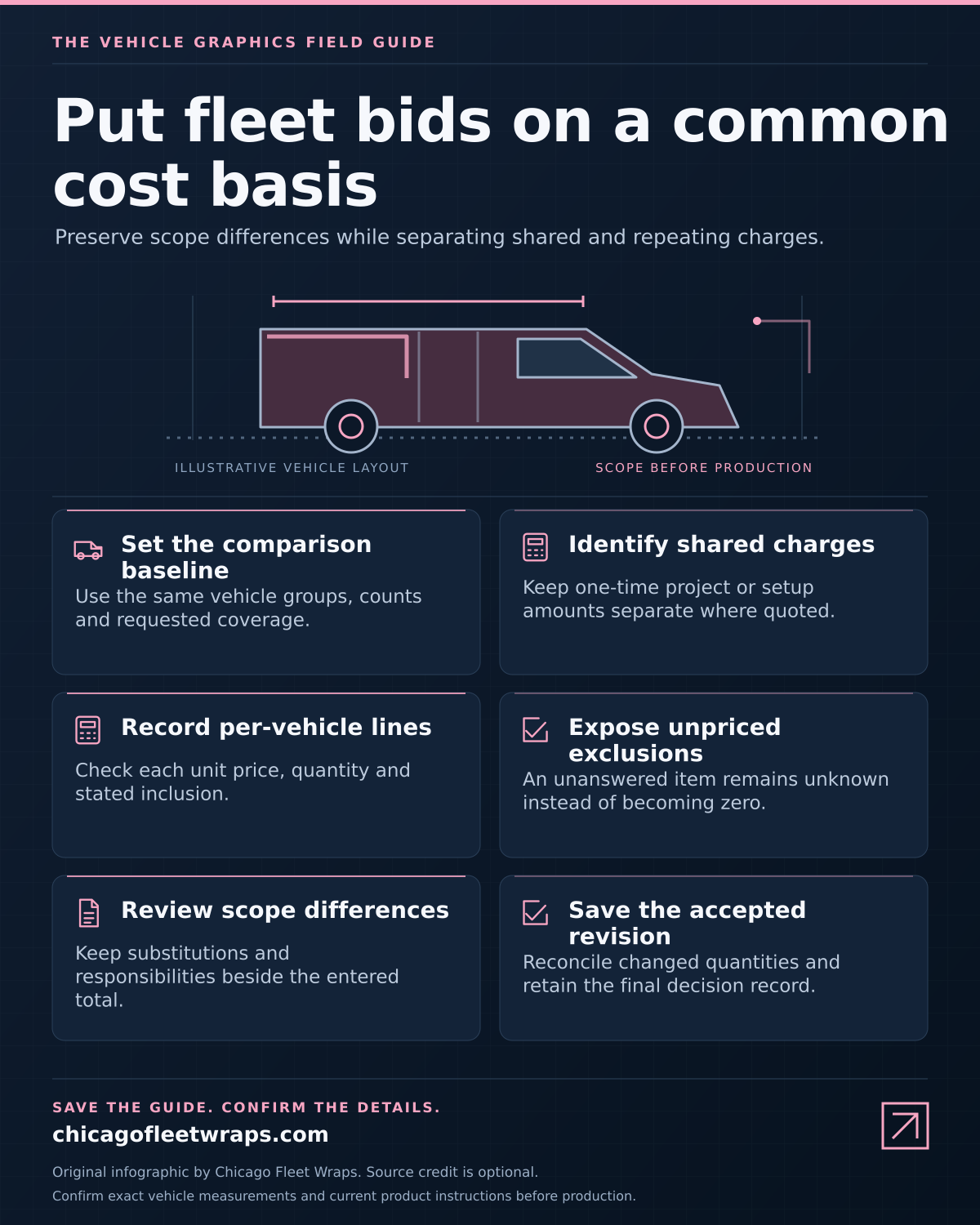
Practical guide
Normalize fleet bids without rewriting their scope
Separate shared setup from per-vehicle charges and retain every original assumption beside the comparison.
Read the guide: Normalize fleet bids without rewriting their scopeGuides and planning infographic
Put shared charges, vehicle prices and exclusions on a consistent basis while preserving the scope differences that matter.

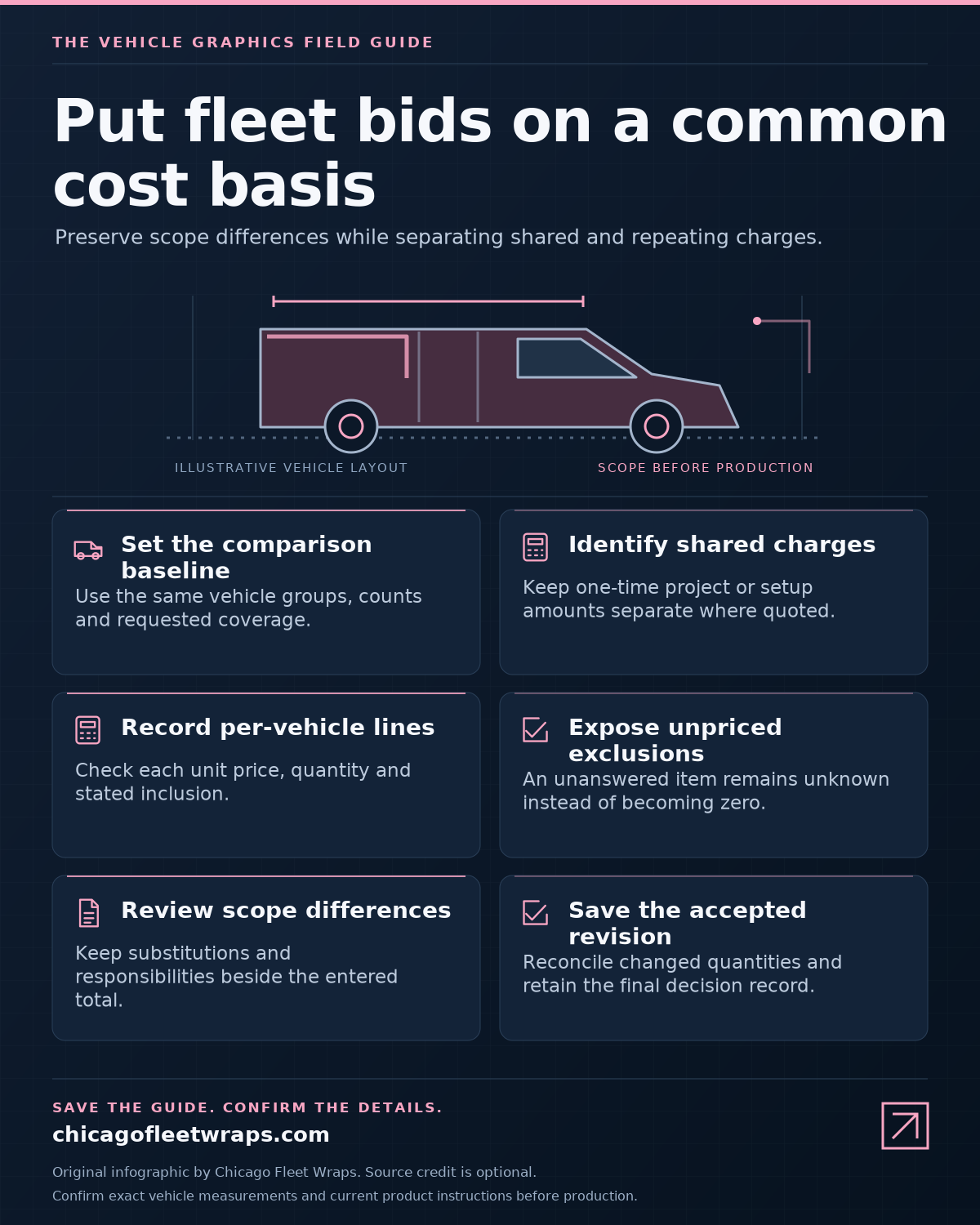
A visual you can keep
Preserve scope differences while separating shared and repeating charges.
Use the planning example from Chicago Fleet Wraps, download a copy, or read the related project guides.
Decisions before production
Practical guide
Separate shared setup from per-vehicle charges and retain every original assumption beside the comparison.
Read the guide: Normalize fleet bids without rewriting their scopePractical guide
Give each unanswered or omitted item an owner, a scope reference and a clear next action.
Read the guide: Create a fleet bid exclusion registerPractical guide
Keep quantity, coverage and responsibility changes connected to the price revision they produce.
Read the guide: Track cost changes after a fleet proposal is revisedNo. Record the item as unpriced and obtain a supplier response if it matters to the purchase. An invented allowance would make the apparent precision of the comparison misleading.
Read the detailed guide: Normalize fleet bids without rewriting their scope
No. It may be missing information rather than a refusal to include work. Ask for clarification and preserve the distinction until the supplier responds.
Read the detailed guide: Create a fleet bid exclusion register
You can create a new version from it, but retain the earlier input snapshot and explain the change. Otherwise the business loses the ability to reconstruct what each proposal version covered.
Read the detailed guide: Track cost changes after a fleet proposal is revised
It can show an average, but may hide shared charges and different vehicle groups. Preserve the underlying line items and scope before treating an average as a comparable unit price.
Read the detailed guide: Normalize fleet bids without rewriting their scope